This blog is about travelling through Japan on a bicycle. Initially on a foldable bicycle (Brompton) and more recently mostly by road bike (Spezialized)... but also by train, ferry, plane, bus or any other transport, if sea, weather, mountains or the like come between me and my desire to ride.
I have tried to summarise information that could be potentially helpful also for other bicycle travellers through Japan, such as list of bicycle roads, helpful web pages etc.

Showing posts with label Volcano. Show all posts

Sunday, 31 May 2026

D2 - Fuji Subaru Line

Route: Up to the 5th station of Mt Fuji
Bicycle: 68 km
Total ascent: 1509 m 
Average speed: 13,6 km/h
Riding time: 5 h 
Weather: Sunny , not too warm, not too cold, around 20C


Living in Japan means going up Mount Fuji. Hiking I tried once 31 years ago and only got from the 5th to either the 6th or the 7th station. But by bicycle today, I managed to get up all the way to the 5th station where the road ends.


I had some trepidations about this long climb, but finally it was easily rideable, just very long and I have to admit a little bit boring.

The gradient is relatively stable, I think the steepest section of 1 km was slightly below 9%. There are pillars every kilometer so you have a good idea where you are and they also tell you the expected average gradient for the next kilometer.


Although there are a lot of cyclist going up, and maybe this weekend even more than normally, because next weekend is the  big hill climb challenge… However, there is no vending machine or water up until to the fourth station at 2020 m of elevation. 

The bottle I bought down still in the village at the convenience store was empty after about 6 km. Actually, it wasn’t empty, but I tried not to empty it until I knew where I could find some water. I found on the map a glamping site and was able to get additional drinks from their vending machine. I also asked a cyclist on the route, if he knew some vending machine up, but it turned out that the machine he remembered didn’t exist anymore. Surprisingly, there was no vending machine at the toll gate, where even as a cyclist you need to pay ¥280 as entrance fee. Which is only a 10th of a car.


After that, the “stations” of Mount Fuji start. When I attempted to hike up Mount Fuji back in 1995 it was a very frustrating experience. I knew we started at the fifth station and the tenth station is on the top so you start hiking, and we hiked at night, and after a while you start seeing some lights in the distance and think “okay, great there comes the sixth station”. And so far so good. Then you continue and relatively swiftly after, you see some more lights so I thought “okay, well that’s going better than I thought that must be the seventh station”. But that is not true. It is simply that the sixth station has a lot of different accommodations. I don’t know if I would have managed to get all the way up if I had known in advance, but it was extremely demotivating to be still at the sixth station even after passing so many huts that I always thought “okay, now this must be the seventh station”. So finally, we spent the night on a bench in front of one of those stations. 


For the cyclist cyber this problem doesn’t exist. There are markers every 100 m how much kilometers are missing to the fifth station and also the 1st to 4th station are generally only one. However, really only at the fourth station there is a place where you can buy food and drinks. I actually don’t know about the food. The place was already closed.

I’m writing a lot about drinks rather than my cycling experience. But I have to admit I’m paranoid of running out of water while cycling. I don’t think I ever actually did run out of water and I always have two bottles which probably together are a little bit over 1 L. When the first bottle gets about half empty, I start with my paranoia where I can find some more water. Normally in Japan, this paranoia isn’t very strong, because there’s vending machines everywhere so there is really no risk to run out of drinks. But when I’m in more remote places or on climbs, but I don’t know yet where the vending machines are my paranoia takes hold of me.

Overall, I would say that the climb was relatively boring. It’s never really challenging, which obviously is nice, but except for the last few kilometers there are also no views. So essentially, it’s a long, long road with a median gradient, riding up through a forest. Plus cars, plus buses. While I was riding up, I wasn’t really enjoying it, between my paranoia for the vending machine and the relatively boring uphill. But maybe now that I know where the vending machine is, I would enjoy the ride a little bit more. The downhill was actually quite okay, while long (30 km), it’s not steep. Thus, once I was back at the foot of the mountain, I already wanted to climb up again.

On one of these stations, I ask some cyclists if they knew where to find a vending machine and their tip with the fourth station was correct. As they were already riding downhill, they even shared some of their water with me. Which was very reassuring.

Enough about water, vending machines, and boring climbs. Now some pictures of the day: 

Before starting the climb proper, I had a good view on the target: 


While climbing generally, you do not actually see Mount Fuji. Which makes sense after all you are on the mountain.

 
The second station was the only one without any amenities at all. At the first and the third there was at least a toilet and at the forth: a toilet, a vending machine and a small bar, which had already closed for the day.


Further up one could see the crater. 


And from the fifth station one had a view over the northern Alps, Tokyo, Hakone, etc., etc. it’s always impressive how high mountains can look so low if you are on a much higher mountain.


Back down from the mountain I passed through the Mount Fuji exhibition area. I wasn’t interested enough to actually dedicate some time to it, but maybe for a rainy day. It’s something to keep in mind. Although I wouldn’t really know why I would be here on a rainy day.

 
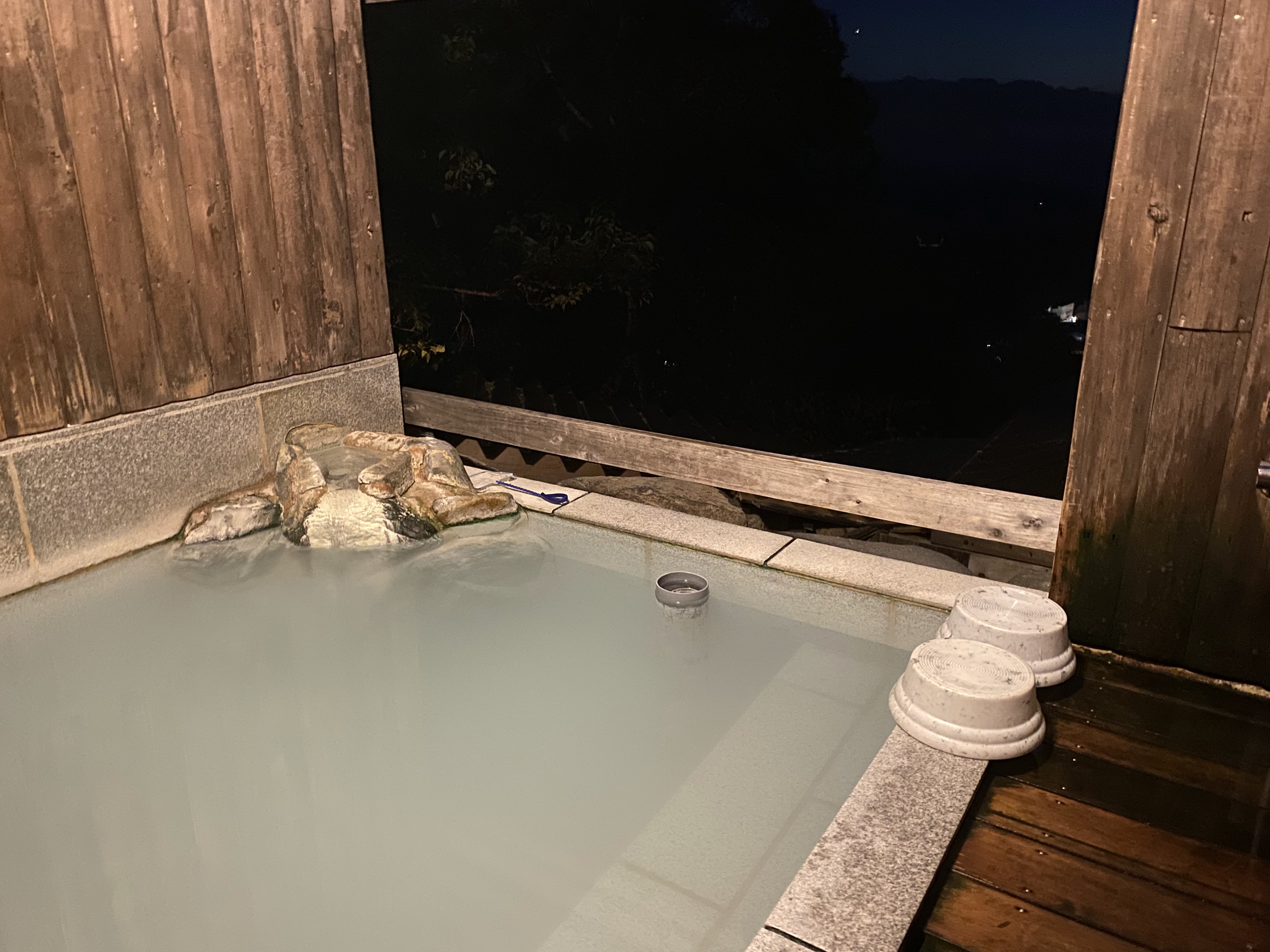
Before finishing the day, I wanted to have a last look on Mount Fuji and gave a quick spin around a small part of lake Kawaguchi. Before heading back to my hotel and soaking in the hot onsen. 

Saturday, 30 May 2026

D1 - Fuji 4 lakes

Route: Kawaguchiko - Saiko - Motosuko - Shojiko 
Bicycle: 67 km
Train: 100 km
Total ascent: 392 m
Average speed: 18,9 km/h
Riding time: 3:32 h
Weather: very sunny, windy, 25C


My company gives an additional day of vacation during the month of your birthday. I can see in the weather forecast that from mid next week the rainy season seems to start, and it is going to get humid and then probably hot.well, this weekend it is very sunny no rain forecast at all and not yet too hot. So I took my birthday leave day on Monday 1st of June. I also still had some vouchers from furusato nozei for hotels in Kawaguchiko. Surprisingly, it was no problem to find a relatively cheap room at short notice in a hotel with a rotenburo right in Kawaguchiko.

I had originally planned to take the train only to Hashimoto and then to cycle on Doshi Street over the mountains to Yamanakako and then over here to Kawaguchiko. But when I arrived at the station close to my house to take the train and disassemble the bike, it was already relatively warm at 8 am in the morning. So instead, I decided to take the train all the way to Kawaguchiko, which is much higher and presumably a little bit colder.and I think that was a good decision. Not only because of the slightly lower temperatures but also because I could cycle today around four of the lakes around Mount Fuji and have absolutely splendid views of the mountain. While I actually don’t really like Doshi Street as it has its fair share of cars and trucks.


I have been here before around all these lakes, both with very good views of Mount Fuji, as well as on a very rainy summer day with absolutely no view of the mountain. Today initially at Kawaguchiko Mount Fuji was partially behind clouds, but as the day progressed the clouds were swept away by very strong wind and a naked Mount Fuji appeared in the distance over the lakes.


Recently on Netflix, there was a Japanese TV series about an alien  living and working in a simple hotel around Mount Fuji. I always suspected that the hotel was on lake Shoji. And today I passed in front of it. It’s a typical hotel of this area quite outdated, but in a beautiful location.


I had no idea that this television series was so famous, and that people come here to take pictures of the locations where it was filmed. But I was clearly not the only person taking a picture of that hotel.

At the lake in front of the hotel, I had my onigiri and then continued back to Kawaguchi to my hotel.


I didn’t only see this apparently famous film location, but also the much more famous Lawson with Mount Fuji in the back. I had always assumed that that Lawson was somewhere around Gotenba but instead, it’s a few meters from Kawaguchiko station.I did not take a picture, but took a picture of another Lawson much closer to my hotel where I got my dinner and breakfast for tomorrow.

For tomorrow, the plan is to ride up Mount Fuji. Let’s see how that will go. 

Tuesday, 28 April 2026

GW2026 D2 my mother was right - Hagi 😍

Route: in and around Hagi
Bicycle: 39 km
Total ascent: 352 m
Average speed: 11,8 km/h
Riding time: 2:50 h 
Weather: Sun and clouds, 25 C


My mother has been enchanted by Hagi ever since she visited in 1995. And she was right! Hagi is a wonderful , traditional Japanese town . One of the few not destroyed by development. Actually probably the biggest that still feels quite traditional but is also alive. 

Some other much smaller examples I could think of are: Imaicho (but MUCH smaller), Magome (much smaller and now totally overrun by tourists wanting to “hike” between Magome and Tsumago). But I don’t really know any other town even somewhat similar to Hagi. 

I started the day at Hagi castle. Surprisingly one is allowed to ride inside the castle remains with a bicycle. Not sure if this was a good idea. Anyway, from the castle little remains just the moat…


.. and a shrine built by the townspeople after the castle had been torn down in admiring memory of their local daimyo now powerless, at least officially. 

There was also a rather nice garden around a tea house with Rhododendron in full bloom.


With the castle entrance fee one also gets entrance to a samurai building just outside of the castle, which however, was rather disappointing. Allegedly it’s the biggest remaining samurai building in Hagi, but it is just a row of tatami rooms.

From there, I cycled through the old part of the town, which is characterized by long walls on both sides of the road, old  residences, and a surprising amount of gardens, specially gardens with citrus fruits.Hagi is famous for summer mandarins (夏みかん). My mother even brought one of them back from her trip to Tokyo and she still remembers, I don’t.

In the old part of the town, I visited the most famous residence: The house of the Kikuya clan. Apparently, they started out as samurai, but then lost their master, and with that their status as samurai. From there they evolved into merchants, which was the lowest rank in Japanese society back then. But that didn’t impede them to become extremely wealthy, and well liked by the local daimyo and construct a huge house with an even larger garden.

After pottering a little bit more through the old streets, and passing by the Meirin Gakusha, an enormous, wooden school building from the Meiji era, now tourist information center.

From there I rode to the south and tip of the town, had lunch at a typical Japanese coffee shop run by an elderly lady who has a few home-cooked meal options. Close by it was another typical residence of Hagi along a small channel that even flows through the house and was used for cleaning the dishes , washing vegetables and as water source for the bath tub. 

It also had a nice tea room with the best view of the garden with a pond from the same small river. There was an elderly volunteer guide with whom I had a nice conversation about how my mother loved Hagi when she visited 31 years ago and how probably not a lot has changed since. There are tourists in Hagi, including some tourist groups. But even at the highlights, the Kikuya residence, there was always a lot of space around to visit calmly. It seems the city gets exactly the right amount of tourists for keeping the local tourism industry afloat, but not having any signs of over tourism. And I guess as long as Hagi remains off the Shinkansen network it will remain this way. Already now the majority of tourist don’t venture beyond Hiroshima. So going to Yamaguchi and then taking a bus over the mountains to Hagi would seem to most tourists like beyond even the unbeaten track. I’m definitely going to come back, maybe on a trip along the entire sea of Japan side.

The Yukawa residence, was the last residence of the day, from here on to a shrine, a temple, two UNESCO world heritage sites, a volcano, a forest and an onsen with a wide view! 

But let’s go in order. First the shrine of Shoin a famous teacher, who also gave his name to the biggest shrine close to my house where he is buried. 


The next stop was a temple: Tokoji. With so few visitors that the admission fee is self service, meaning that there is a box and a sign how much you should put in the box. The temple itself is big and has a grandiose approach, …

… but the really interesting part is the mausoleum for the Mōri family, the local daimyos.


But there was more to come. The next two stops were UNESCO world Heritage sites. The sites belonging to the industrialization under the Meiji revolution have become UNESCO world Heritage sites a few years ago to recognizing the achievement of the Meiji era to industrialize Japan without being colonized and with speed. 

The two sites in Hagi I visited are a wharf and an iron furnace. Of the wharf the only remains are a sea wall: 


Of the furnace , which actually never worked, more is remaining: 


From here I went to a small peninsula from where one has a wide view over the bay. 


But one can also go down inside the caldera of a cute small volcano:


I even went a bit further on that peninsula to a camellia grove, which however (not surprisingly) had already lost all its flowers. 

Now the last remaining activity of the day was a good soak in the onsen of yet another hotel with a rotenburo from where to enjoy the view over the bay. (Picture below is NOT from the rotenburo but from the top of the mountain.). The view from the onsen was a bit less spectacular but still nice. Down onto a port and the mountains in the background.


Finally back to town, to a wash saloon where I washed and dried my cycling clothes while having ramen in a nearby shop and on the way back got some breakfast items for tomorrow.  I’ll already be leaving Hagi and ride along the coast to the West.


Sunday, 13 October 2024

D2 Okama crater

Route: Zao onsen to Okama crater and back
Bicycle: 49 km
Walking: 2,6 km
Total ascent: 1480 m
Average speed: 12,2 km/h
Riding time: 4:02 h
Weather: sunny and early autumn temperatures. Between 20 and 10 C depending on height 


Today up to Mount Zao and its very photogenic crater. 

To get there even from Zao onsen which is already halfway up, it still takes a lot of more ascending. But no place crazy gradients. Thus slowly but steadily, I made it up there. From Zao onsen one first needs to go up to about 1000 m but then the road drops again down to about 700 m from where it is an up again to about 1600 m. And the same, obviously on the way back.


On the way up, I took a brief stop at the athletes Village, which seems to be a sport training center for various kinds of sports to get additional fluids from their vending machine.

From around 1300 m the koyo started.however, it isn’t an impressive arrangement of colorful leaves, probably because of the lack of maple trees and the food that you get the less trees there are anyway.


Probably the best koyo was just below the entrance to the lift to get up to the crater.


The lift was a typical flimsy Japanese lift. This one was lacking practically all kinds of safety measures. It was essentially only a place to sit without any backrest and one pillar to which to hold on. Luckily, it did not get very high above ground. And it wasn’t windy. I’m always surprised by these lifts in a country that is so risk adverse like Japan. A country that regulates every single river and creek so it doesn’t cause any destruction. A country that builds walls against the ocean blocking most of the view to protect itself from tsunamis. A country that closes hiking path for very extended times due to minor volcanic activity. But at the same time a country , where if you have a lift that was built probably before more stringent regulations came into place, you are totally welcome to keep it operating even when it is clearly is a rather dangerous affair. 


Before getting on the lift, I don’t all my clothes as it was already relatively fresh at the base of the lift and at 1700 m. It was a little bit colder and a bit more windy. But my cloths were up to the challenge. 


The crater itself can be accessed also by car, but not by bicycle, and the lift I took. With this being a long weekend and wonderful weather, they were quite a number of tourists up there. and thanks to them. There was also a small visitor center that did sell some easy food. I got a big pork bun which I ate on my way down.


After that, it was down first with the lift then 13 km or so by bike luckily it hadn’t been too steep on the uphill so on the downhill, there was no part that was uncomfortably steep. Then up again and over a pass and down again to Zao Onsen, where I bought in the conbini my dinner for tonight and returned up the hill to my hotel with the many different rotenburos. For today, I had reserved with a spectacular view, only that I was there after sunset. But still, if you switched off the light then you could look out into the darkness over the valley, see the mountain range opposite, the lights in the valley and along the hills, under the dark sky with a few stars.


Saturday, 25 May 2024

Around Hakone

Day 1

Route: Matsuda - Sengokuhara - Owakudani - Hakone
Bicycle: 45 km
Train: 70 km
Total ascent: 1397 m
Average speed: 10,5 km/h
Riding time: 4:22 h
Weather: warm but definitely not too warm , cloudy


A few weeks ago I already cycled here to Hakone but didn’t get down to the Hakone valley, instead went down to Gotemba after a look at Ashinoko from Nagao pass. This time I came over to Hakone and am even staying here. 

From Matsuda I took a different road over to Hakone (with less climbing) but still clocked nearly 1400 m of ascent on a very quiet but very well maintained road. Hakone Kintaro line. 

The downhill wasn’t very long, but surprisingly cold. And I didn’t bring my rain/wind jacket thinking that I wouldn’t need it anymore for the cold and no rain was forecast for today (but it did rain very slightly for a short time just before arriving in Motohakone). So mental note: bring rain jacket always can be useful for a cold downhill as well. 

I am also always surprised how high the area around Mt Fuji already is. Ashinoko is at about 700 m, and it’s noticeably cooler here. 

During lunch I looked up what to do in Hakone (I came quite unprepared) and discovered that there was a temple right behind the restaurant where I was eating and that another sightseeing spot (Sengokuhara grassland) was on my way. 

I first visited the temple. The temple itself want interesting but the hill behind it was covered with status of very funny gods.


The next stop were some grasslands… well… green…


From there surprisingly it was still uphill and then I added even more uphill by going to Owakudani, a place o have fond memories of from 1995, when I arrived there by cable car and then walked on the volcano with boiling mud besides the path. Now all this is off limits and only accessible with a guided tour. It was off limits for a long time due to too much volcanic activities and now seeing the crowds up there it’s probably off limits because of the sheer number of visitors. There aren’t that many places on earth where you can conveniently get to the crater of an active volcano by public transport.

In typical Japanese fashion they are trying to control the volcano by building structures within it. I wonder what the volcano thinks of all this.


From there down to Ashinoko with a shy Fuji hiding behind some clouds, along the lake on a bicycle path…

… and into an onsen with great views right over the lake.

From there it wasn’t far to Motohakone and my hotel, but I did stop briefly at the famous torii in the water, which even at this relatively late hour still had a queue for taking pictures.

Hakone was always a very touristy area but it’s surprising how many foreigners are here. In the capsule style hotel I am there are only foreigners, in the restaurant I had dinner was only one table with Japanese guests and even in the onsen I went there were more foreigners than Japanese. 

So now making a plan for tomorrow… where should I go from here? 


Day 2

Route: Hakone - Nagao pass - Ashigara pass - Kaisei 
Bicycle: 70 km
Train: 75 km
Total ascent: 1365 m
Average speed: 13,8 km/h
Riding time: 5:02 h
Weather: surprisingly cold, cloudy and this no Fuji


For the second day I made it back to Odakyu line but not through the descent from Hakone to Odawara, which frightens me a bit (plus it was way too close to where I started my day), but instead crossing again the entire caldera of Hakone passing over Nagao pass down to Gotemba and then up again to Ashigara Pass before finishing the day in a wonderful onsen.

My hotel was a kind of hip interpretation of a capsule hotel, but actually quite okay and at a bit over 8000 yen a cheap solution in Hakone which is totally overpriced (and overrun). After breakfast I went to the pier to see the pirate ships (but no Fuji) …

… before cycling back along the shore to the opposite end of the lake. There is a cycle / pedestrian path along most of the shore and relatively early in the morning it was still cyclable. I’d imagine later in the day on weekends it is so clogged by pedestrians that it wouldn’t make for a nice experience. 

On Komoot I saw a recommended route from the lake to the start of the climb to Nagao pass and it was a wonderful small road through an enormous golf course. Not really sure if it is one golf course or several ones, but most of that inner area of Hakone is just golf course. Back in the day it must have been a swamp. 

From there to the start of the climb to Nagao pass and then up. I did ride up from the other side to this pass a few weeks ago and it was such a nice climb. Gradually and with a great view. From the Hakone side it is an equally enjoyable climb with great views of the entire caldera (and its golf courses in the valley and smoking volcano) 

As it was cloudy this was the best view of Mt Fuji that I got. 


After a nice downhill of Nagao pass it was up again over Ashigara pass which even from the Gotemba side is hard (but not that long). A rest on the top, again no view and then some curry udon halfway down. After some more downhill it was uphill again to the onsen of the day. Which was a wonderful onsen with two big pools outside in what seemed to be pure nature. I am sure it’s nature that got some help but it was really feeling like sitting in a hot pool in the middle of the forest. There were also relax areas in similar positions.